Inheritance Procedure and Political Murder in The Turks; The Murder of Shahzade Mustafa
Categories
Political PhilosophySummary
This article analyzes the murder of Shahzade Mustafa by situating the event within the Ottoman succession system, political rivalries, legal debates, and psychological pressures of imperial power, arguing that the assassination cannot be reduced to a single cause but reflects the structural tensions of Ottoman sovereignty.
Extended Summary
This article examines the murder of Shahzade Mustafa as one of the most tragic and controversial events in Ottoman history. Rather than approaching the incident as a simple act of cruelty or political conspiracy, the analysis situates the assassination within the broader framework of Ottoman succession practices, legal traditions, political rivalries, and the psychological burdens of imperial rule. The aim is not to justify or condemn, but to understand the structural and human dimensions that led to this outcome.
To understand the murder of Shahzade Mustafa, it is first necessary to examine the Ottoman system of succession. Inherited from earlier Turkic traditions, sovereignty was not automatically transferred from father to eldest son. Instead, every male member of the dynasty possessed a potential claim to the throne. This principle, rooted in the concept of kut, regarded sovereignty as a divine favor granted to the individual who ultimately secured power. As a result, succession struggles were not anomalies but structural features of Turkish and Ottoman political life.
The Ottoman state sought to prevent prolonged civil wars by prioritizing the establishment of a single, centralized authority. Fratricide emerged as a customary practice justified by the preservation of public order and state survival. Although codified under Mehmed II, this practice was never fully reconciled with Islamic law and remained a subject of moral and legal debate throughout Ottoman history.
Within this framework, Shahzade Mustafa appeared as a strong candidate for the throne. He was the eldest surviving son of Sultan Suleiman, well-educated, militarily experienced, and widely respected by the army, scholars, and provincial elites. His popularity, however, became a liability in a political environment where support from the military could easily be interpreted as a threat to the reigning sultan.
The internal dynamics of the palace further complicated Mustafa’s position. The death of his grandmother Hafsa Sultan and the execution of Grand Vizier Ibrahim Pasha weakened his protection at court. Meanwhile, Hürrem Sultan and her faction sought to secure the throne for her own sons. Rüstem Pasha, aligned with this faction, played a decisive role in shaping the political narrative surrounding Mustafa by circulating allegations of rebellion and foreign correspondence.
Historical sources differ in their interpretation of Mustafa’s actions. While some claim that he engaged in preparatory activities for rebellion, others argue that his correspondence and political positioning were intended only to secure a smooth transition after his father’s natural death. Crucially, no definitive evidence proves that Mustafa attempted an armed uprising during Suleiman’s lifetime.
The psychological dimension of Sultan Suleiman’s decision is central to this analysis. As a ruler who had built an unparalleled reputation through conquest and authority, Suleiman faced the fear of deposition, humiliation, and loss of legitimacy. Reports of soldiers cheering for Mustafa as he approached the imperial camp intensified these fears, transforming paternal affection into political anxiety. In such an atmosphere, the presence of popular support for a potential successor could easily be perceived as an imminent coup.
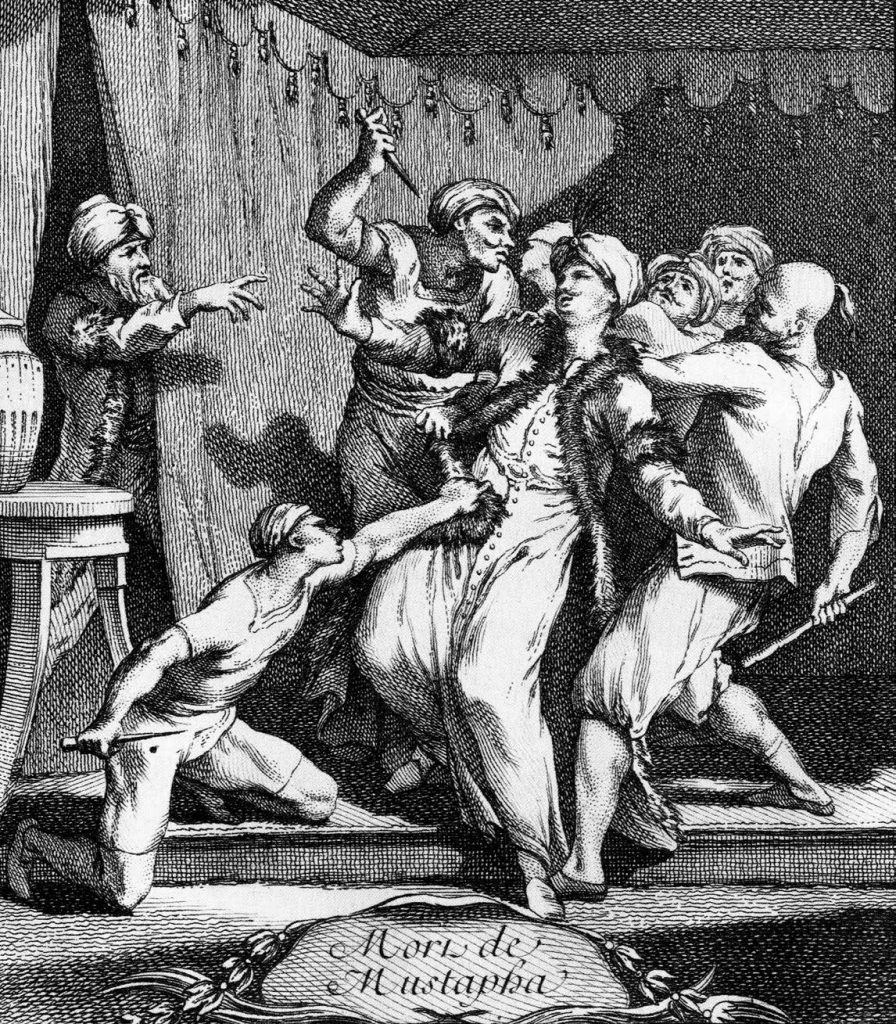
The execution itself took place during the Persian campaign of 1553. Shahzade Mustafa was summoned to his father’s tent under ceremonial pretext and was strangled by executioners upon entry. Contemporary accounts differ in detail, but all agree that Mustafa entered the tent unarmed, expecting reconciliation rather than death. The subsequent execution of his young sons further reinforced the tragedy of the event.
Following the assassination, widespread grief and unrest emerged among the military and the public. Poets and chroniclers openly lamented Mustafa’s death, and the dismissal of Rüstem Pasha shortly afterward suggests that the court sought to contain the backlash. Nevertheless, the event left a lasting scar on the collective memory of the empire.
This article argues that the murder of Shahzade Mustafa cannot be explained by a single factor such as palace intrigue, personal ambition, or legal necessity. Instead, it was the outcome of intersecting forces: a succession system prone to violence, factional struggles within the palace, psychological pressures of absolute rule, and the absence of a clearly defined legal mechanism for peaceful succession.
In conclusion, Shahzade Mustafa appears as a tragic figure caught between dynastic tradition and political paranoia. His murder represents not merely an individual injustice, but a structural failure rooted in the logic of sovereignty itself. To reduce this event to moral absolutes would obscure its historical complexity. Understanding it requires acknowledging both the human cost and the systemic conditions that produced it.
Note: You can access the full article via the links below.
Download Article Read on Academia