The Stranger - Albert Camus

Categories
Philosophy, Axiology, Philosophy of Human NatureTags
Mathematics, Phenomenology, Hermeneutics, Value Philosophy, Moral PhilosophySummary
This article examines the idea that exaggerated thoughts arise not from human weakness but from the power of the unknown, drawing on Albert Camus’ insight in The Stranger to analyze fear, belief, superstition, and social perception.
Extended Summary
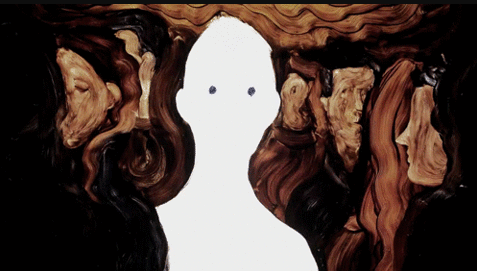
This article takes as its starting point Albert Camus’ striking observation in The Stranger: “Man always falls into exaggerated thoughts about the things he does not know.” Rather than treating this tendency as a moral or intellectual flaw, the text explores exaggeration as a natural response to mystery. The unknown, by its very nature, produces power in the human mind, and it is this perceived power that gives rise to fear, belief, and distortion.
Human beings tend to associate the unknown with danger or superiority. When a person does not understand what they are facing, hesitation and timidity emerge almost instinctively. This reaction is not caused directly by fear; rather, fear itself is generated by the power attributed to what is not known. Knowledge, by contrast, diminishes this power. As understanding increases, exaggerated thoughts dissolve and are replaced by confidence and courage.
Early human history offers a clear illustration of this mechanism. Confronted with natural forces they could not explain—storms, wild animals, darkness—early humans magnified the power of these phenomena in their imagination. Over time, as experience and knowledge accumulated, these forces lost their exaggerated status. Yet the psychological structure behind this response has not changed. In the modern world, whatever remains unknown continues to be perceived as overwhelmingly powerful.
This dynamic is especially visible in religious belief. Is it more difficult to believe in an invisible god or in a visible one? The power of mystery suggests that the unseen divinity exerts a stronger psychological influence. When humans are unable to endure the pressure of this unknown power, they attempt to make it visible through idols. Visibility offers relief, because what can be seen can also be imagined as controlled. As the divine becomes visible, fear diminishes, and reverence risks turning into familiarity or even manipulation.
The same logic applies to spirits and supernatural beings. Fear often surrounds even the mention of their names, precisely because they remain unseen and undefined. If such beings were visible or fully understood, the exaggerated power attributed to them would fade. In this sense, superstition emerges as an exaggerated belief born from ignorance. Mystery generates power; power generates exaggeration; and exaggeration solidifies into belief.
Exaggeration, however, is not limited to fear. All human emotions can be shaped by the unknown. Social relationships offer a parallel example. When entering a new environment, an individual initially appears mysterious, provoking exaggerated judgments—often positive ones. Others may perceive them as exceptional or extraordinary. As familiarity grows, the power of the unknown declines. If both sides possess strong character, genuine intimacy replaces exaggeration; otherwise, respect gives way to indifference.
This explains why individuals who preserve their boundaries often command lasting respect. The unknown surpasses familiarity. What is fully known loses its aura, whereas what remains partially concealed continues to inspire exaggerated thought. The same mechanism appears in practical life. Tasks we have never experienced are initially perceived as overwhelming. Once we gain knowledge, we frequently discover that they were never as formidable as imagined.
In contemporary society, a different form of exaggeration emerges: false mystery. Here, the source of power is not genuine ignorance but the inclination of the majority. Individuals who successfully convince others that they possess qualities they do not actually have benefit from this collective illusion. The power appears as mystery, but it is merely the reflection of mass belief.
Love, too, follows this pattern. Anxiety and emotional uncertainty intensify the unknown, leading to idealization and exaggerated perception of the beloved. As knowledge replaces anxiety, exaggeration either transforms into authentic intimacy or collapses entirely. Once again, the balance between knowledge and mystery determines the outcome.
In conclusion, exaggerated thought is not a sign of human weakness but a structural response to the unknown. As mystery expands, exaggeration grows; as knowledge accumulates, perception becomes proportionate. Camus’ insight reminds us that human understanding is shaped less by what we fear than by what we do not yet know. The task of thought, therefore, is not to eliminate mystery entirely, but to recognize its power and resist surrendering to distortion.
Note: You can access the full article via the links below.
Download Article Read on Academia